

Establish a food matching platform to reduce food waste
About
We're creating a pre-closing food ordering platform where restaurants list discounted meals. Customers can purchase available food at lower prices, reducing waste while ensuring fresh food reaches those in need. Our long-term vision includes expanding access to economically disadvantaged groups, giving them agency in food selection.
Role
UI/UX Designer
Platform
Mobile Web
Tool
Figma
My Contributions
-
Served as the sole designer on the project — joined when only a few rough wireframes existed, rebuilt the entire UI and delivered high-fidelity mockups within two weeks, then continued designing features iteratively as requirements evolved.
-
Led user research through surveys and interviews with both consumers and merchants, translating insights into interface improvements.
-
Authored and designed content and visuals for the LINE Official Account, completing the end-to-end service experience.
Consumers' Feedback
4.4375
Satisfaction
score 1-5
4.3125
Easy to Use
score 1-5
4.8
Recommendation
score 1-5
.png)

Goal
To build a food matching platform connecting restaurants' unsold meals with consumers through online reservations, minimizing food waste.
Design Process


Excess Meals and Near-Expiry Food
Food waste spans pre-cooking ingredients, cooked meals, and near-expiry products. We focus on immediately actionable areas: excess restaurant food and near-expiry retail items, which can be redirected to those in need while raising awareness about food waste.
Staff shortages for Food Banks and Non-Profit Organizations
Food banks receive unpredictable donations and lack staff for timely delivery, creating secondary waste. A real-time notification system allowing interested buyers to purchase meals directly would reduce spoilage and improve distribution.
5W1H
Exploring Food Waste Issues
What
What is the food waste problem?
Edible food discarded during production, processing, sales, and consumption due to appearance, perceived expiration, or other preventable factors.
Why
Why does food waste occur?
Consumer Standards
Rejection of imperfect-looking but edible food
Supply Chain Issues
Damage and spoilage during transport and storage
Consumption Habits
Overbuying, improper storage, and excessive preparation
When
When does it occur?
Throughout the entire food supply chain: production, processing, storage, transportation, retail, and consumption.
Where
Where does it occur?
Wholesale markets and retail stores
Near-expiry food and items with imperfect appearance.
Restaurants
Unsold food and customer leftovers.
Family
Over-purchased or improperly stored food items
Who
Who is affected?
Consumers
Wasted food increases household expenses and impacts the environment.
Restaurants and retailers
Handling excess food increases operational costs.
Society
Wasted resources and energy create negative environmental impacts.
How
How to solve it?
Technology
Real-time matching platforms connecting surplus food with consumers
Policy
Government incentives promoting waste reduction practices
Education
Consumer awareness campaigns about waste impacts and prevention
Business Innovation
Alternative models like surplus food restaurants and redistribution systems
The Empathy Map
Consumer Empathy Map
Hear
-
Food conservation messaging from personal networks and social media
-
Government and media coverage of sustainability initiatives
Think & Feel
-
Safety and quality concerns regarding surplus food
-
Environmental and social value alignment with surplus food purchases
-
Price sensitivity and convenience considerations
See
-
Social sharing of discounted food purchases and experiences
-
Visual evidence of food waste in various contexts
Pain Points
-
Stigma associated with purchasing discounted/surplus food
-
Inconvenient pickup locations and complicated processes
Say & Do
-
Share positive experiences within personal networks
-
Provide application feedback to improve service quality
Gain
-
Financial savings through discounted purchases
-
Enhanced self-image through participation in meaningful social impact
Competitors Analysis
國內外做相似產品的比較

After studying domestic and international competitors like Taiwan's Taste Me and Denmark's TGTG, we identified key differentiators:
Business Strengths to Adopt
-
Strategic partnerships with established restaurants for credibility
-
Effective marketing and social media presence for awareness building
-
Active location expansion and sustainability partnerships for brand positioning
Experience Pain Points to Address
-
Reservation systems that fail to guarantee meal availability create negative user experiences
-
Point-based prepayment systems reduce transaction costs but increase user friction
Design Observations
-
Competitors demonstrate smooth operational flows with consistent brand identity
-
Opportunity exists for enhanced detail optimization and user experience refinement
SWOT
The analysis of comparing with other competitors
Strength
-
Guarantees product authenticity, enhancing user experience
-
More competitive platform fees than competitors
-
Line integration eliminates need for separate app download
Weakness
-
Later market entry
-
Limited marketing resources
-
Smaller team affecting operational speed
Opportunity
Potential partnerships with charitable organizations to provide discounted meals to disadvantaged populations, creating market differentiation
Thread
-
Established competitors targeting the same market segment
-
Competitors with stronger brand recognition
-
Competitors' existing restaurant partnerships

Real-time redistribution of surplus food
We'll focus on redirecting usable surplus food at discounted prices and transforming potential waste into conserved resources.
How Might We...
How Might We Achieve Real-Time Food Distribution?
For Consumers
Students, young professionals, and budget-conscious groups can access nearby discounted meal information, expanding their options with simple platform reservations.
For Restaurants
Businesses can estimate surplus food and release real-time availability, converting potential kitchen waste into additional revenue.
Meal Matching
Platform-based reservations and pre-closing pickup creates a win-win: additional income for stores, reduced disposal costs, and affordable meals for consumers.
Project Scope
Narrow Down Project Scope
University-Centered Initial Launch
We're partnering with University USR to focus first on campus and surrounding stores. This target makes sense because:
-
High concentration of stores near universities
-
Student population seeking affordable meal options
-
Scalable model that can expand to other university areas after validation
Validate Student Demand
First-Stage POC
Average Weekly Frequency of Purchasing Surplus Food?
-
51% of students purchase surplus food 1-2 times weekly
-
30.8% purchase surplus food 3-4 times weekly
-
86.5% purchase at least once weekly, indicating strong acceptance

Student Interest in Surplus Food Platform
-
Over 80% of students would buy surplus food if available through a platform near their school
-
Platform organizing nearby surplus food options would be convenient and attract many university-area users


LINE as Platform Entry Point
We're leveraging LINE's official platform as our entry point. Based on online food ordering platforms, with limited resources and lower barriers, we're integrating with LINE for merchants to create an accessible user entry point. This approach helps consumers easily adopt the platform and share information.
User Goal
The Customer Side
-
Locate the current city
-
Use filters to find meals
-
Check the distance between the food and you
-
Save food and stores
-
Check the store map
-
Navigate to the store
The Merchant Side
-
Fill out the store application form
-
Set the meals online
-
View the orders that have been taken/not taken on the day
-
View the total sales of the day and the month
-
Use the last three digits of the customer's phone number to find the order
User Flow

Site Map
The Customer Side

UI Flow
The Customer Side
This is our initial concept diagram showing how consumers can search for meals after entering the platform.

The Merchant Side
The merchant side can list their store's products, manage orders using the last three digits of customer phone numbers, and monitor their monthly business performance.


User Testing & Interviews
Second-Stage POC Validation
We conducted a simple questionnaire, selecting students interested in food conservation for interviews. They tested our prototype, shared feedback, and helped identify improvement areas.
Result
Consumers' Feedback
4.4375
Satisfaction
score 1-5
4.3125
Easy to Use
score 1-5
4.8
Recommendation
score 1-5

Interview Results
-
Among 8 respondents, average score for platform helpfulness in finding discounted meals: 4.4375/5
-
Interface ease-of-use: 4.3125/5
-
50% needed exploration time; 50% felt confident with operation
-
Willingness to recommend to friends: 4.8/5
Feedback Details
-
Overall positive operational flow experience
-
Engineering bugs disrupted user experience, affecting product impression
User Confusion Points
-
Unclear button text on order page
-
Navigation confusion after registration returning to LINE menu
-
Meal categories on homepage need clarification
-
Desire for animation when adding to list
-
Need for neighborhood subdivisions within cities
Restaurants' Feedback
Interview Results
The different restaurant types had varying perspectives:
-
Hot pot restaurant disposed of unsold fresh ingredients daily, unsuitable for platform sales
-
Hot pot restaurant thought they did not fit the concept between platform and their sales model.
-
Cafés reported minimal surplus are mainly liquid tea; Chinese restaurants primarily had leftover soup; these restaurants viewed the platform more as an advertising channel for restaurant brands.
Feedback
-
Restaurants typically manage inventory well with minimal surplus
-
Merchants suggested targeting buffets and bakeries with predictable surplus
Interface Feedback
-
Unclear first-time merchant registration button
-
Issues with pickup confirmation button
-
Questions about non-LINE operation options
-
Interest in product exposure enhancement settings
-
Request for daily sales peak time analytics

Persona
The Consumer Side

Alice
22 | Collage Student
College students who want to save money
"I love finding discounted items and promotions, and feel happy when I can save money for daily expense. "
Background
Alice is a university student who needs to work part-time to balance her living expenses, making her price-sensitive. She values life's small pleasures and enjoys finding discounts and deals in daily shopping.
Behavioral
-
Use various discount and apps frequently.
-
Like to browse and share shopping experiences and discount information online.
-
Pay attention to prices and discounts when shopping, and look for the best deals.
Attitudes
-
Like any discount information and promotional activities.
Goals
-
Save on daily expenses and control her budget.
-
Get high-quality and cost-effective products.
Needs
-
Provide detailed information and reviews of discounted products.
-
Increase the number of stores selling discounted meals
-
The interface is simple and easy to use, allowing her to browse and purchase products quickly.
Pain Points
-
Wants to quickly find the most economical items in the platform.
The Restaurant Side

Ban
45 | Restaurant Manager
Manager who willing to try new operating methods
"Using the surplus food redistribution platform not only reduces waste but also brings us more customers and revenue."
Background
Ben manages a medium-sized restaurant with 10 years. He emphasizes on food ingredient and cost control, and actively participates in various environmental and social activities.
Behavior
-
Participate in surplus food redistribution activities actively
-
Check restaurant meals leftover situation
-
Contact with platform sales and other food providers to exchange experiences
Attitudes
-
Open to new technologies and business models, willing to try new operating methods
-
Focuses on customer service and strives to improve customer satisfaction
Goals
-
Reduce restaurant food waste
-
Improve restaurant operation efficiency
-
Enhance brand image and attract more environmentally conscious customers
Needs
-
A simple and easy-to-use surplus food redistribution platform.
-
Effective technical support and problem-solving solutions.
-
Stable and reliable customer sources.
Pain Points
-
Concerned about waiting time for customers to pick up meals affecting normal operations
Optimization
01 Order Submission Button Confusion
Users struggled to distinguish between two ordering buttons

Before
The buttons are not intuitive
Order placement divided into "Add to Reservation List" and "Submit Reservation Directly" - unclear terminology for our online reservation, in-person payment service

After
Adjust the button design
Changed terminology to more intuitive options:
-
"Add to Reservation List" → "Add to Cart"
-
"Submit Reservation Directly" → "Reserve Now"
02 The Add-Button is not obvious
The button of creating store account is not obvious
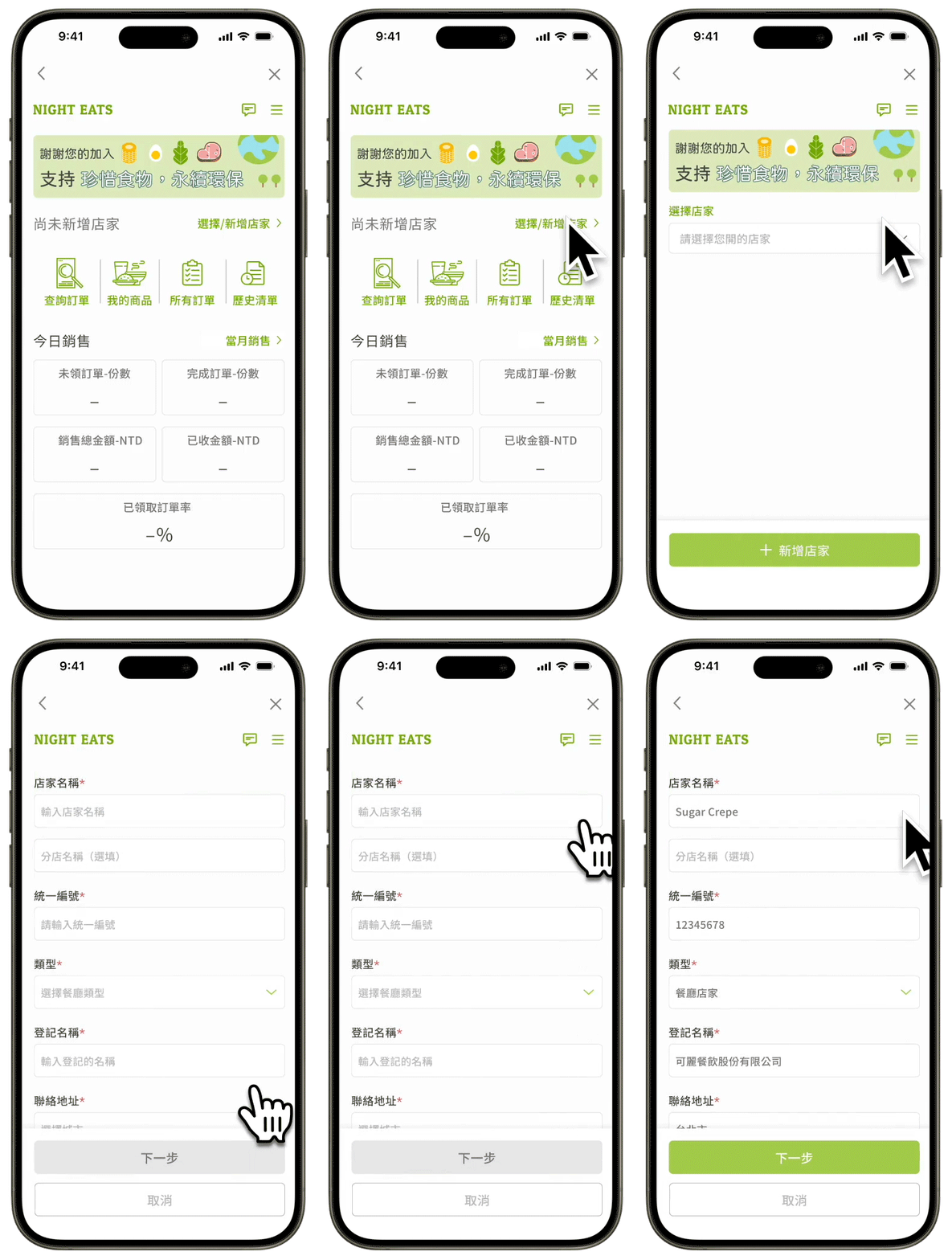
Before
Hard to notice where the button is
-
Merchants struggled to find the store creation button on homepage. Text description lacked clarity and brevity.
-
Original design required navigating to a secondary page and clicking "Create Store" to reach registration form.
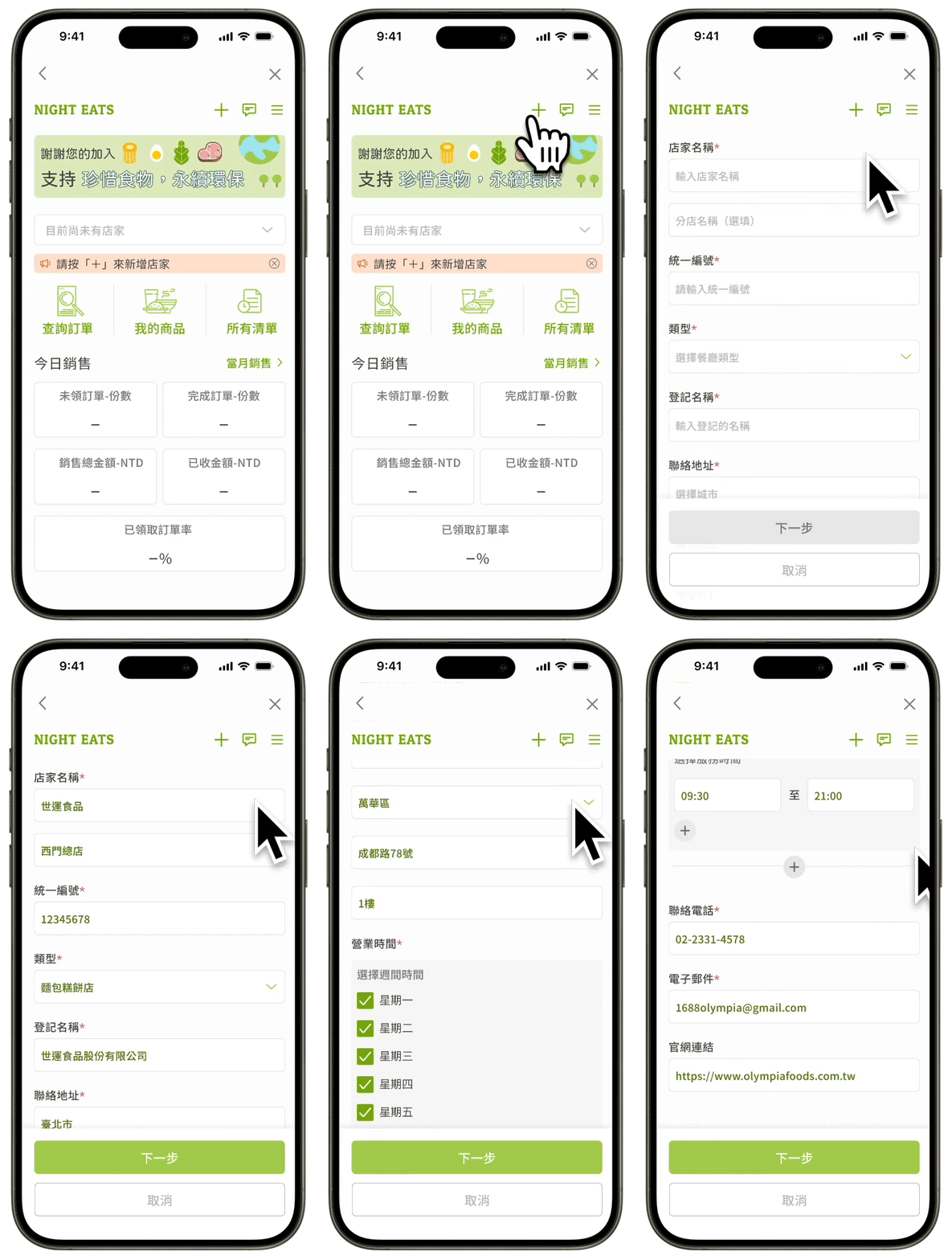
After
Reduced the flow steps
Replaced text-heavy "Select/Add Store" button with intuitive "+" icon button. Users now access form directly, eliminating one step from the process.
03 Meal Pickup Issue
When customers pick up their orders, there are some differences between the interaction design and actual operation on the store side.
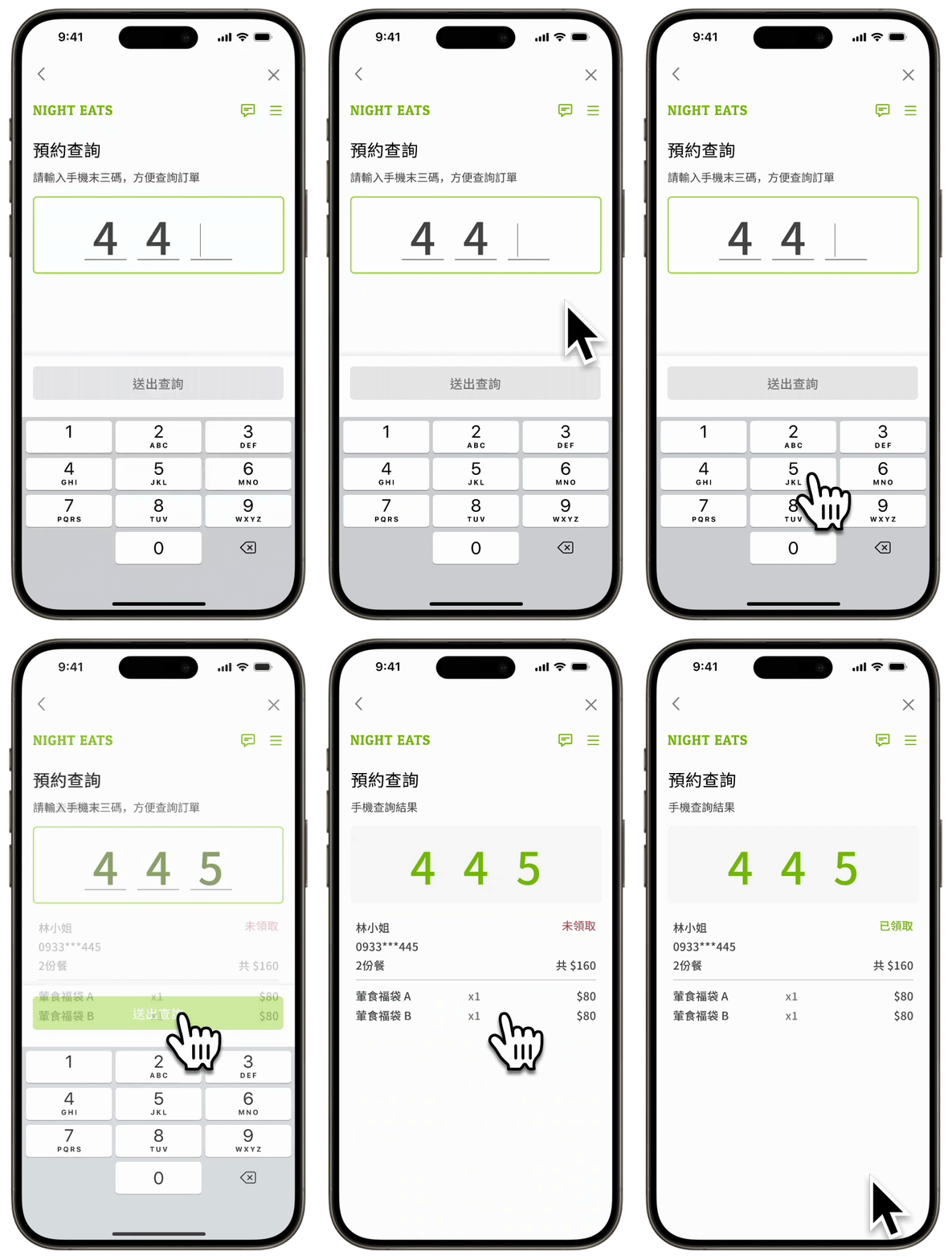
Before
The pickup flow is not smooth
-
No home button after entering phone digits
-
Too many clicks to confirm pickup

After
Adjust the interaction design
-
Changed status display to a button - shows "Pickup" before and "Picked Up" after
-
Added "Return to Home" button for easier navigation
Design System

Other Design Works
Backend Management
The backend management interface is designed to view transaction details in the future, along with other platform management content.
The transaction list design will display every order completed on the platform. To track the status of platform orders, users can use search fields to find specific dates and order statuses, and can also view detailed order information for each individual transaction.


Learning
-
Start recruiting stores during validation phase, not waiting until product is ready - saves development resources and money.
-
Plan default approaches for uncertain decisions and ask detailed questions in interviews about payment methods.
-
Understand store needs before deciding how to convince them to join - don't assume one opportunity point is enough.
-
Business model and pricing are closely connected - understand market needs before designing.
-
Working with college students to post on Dcard was effective for marketing.